08/31/26
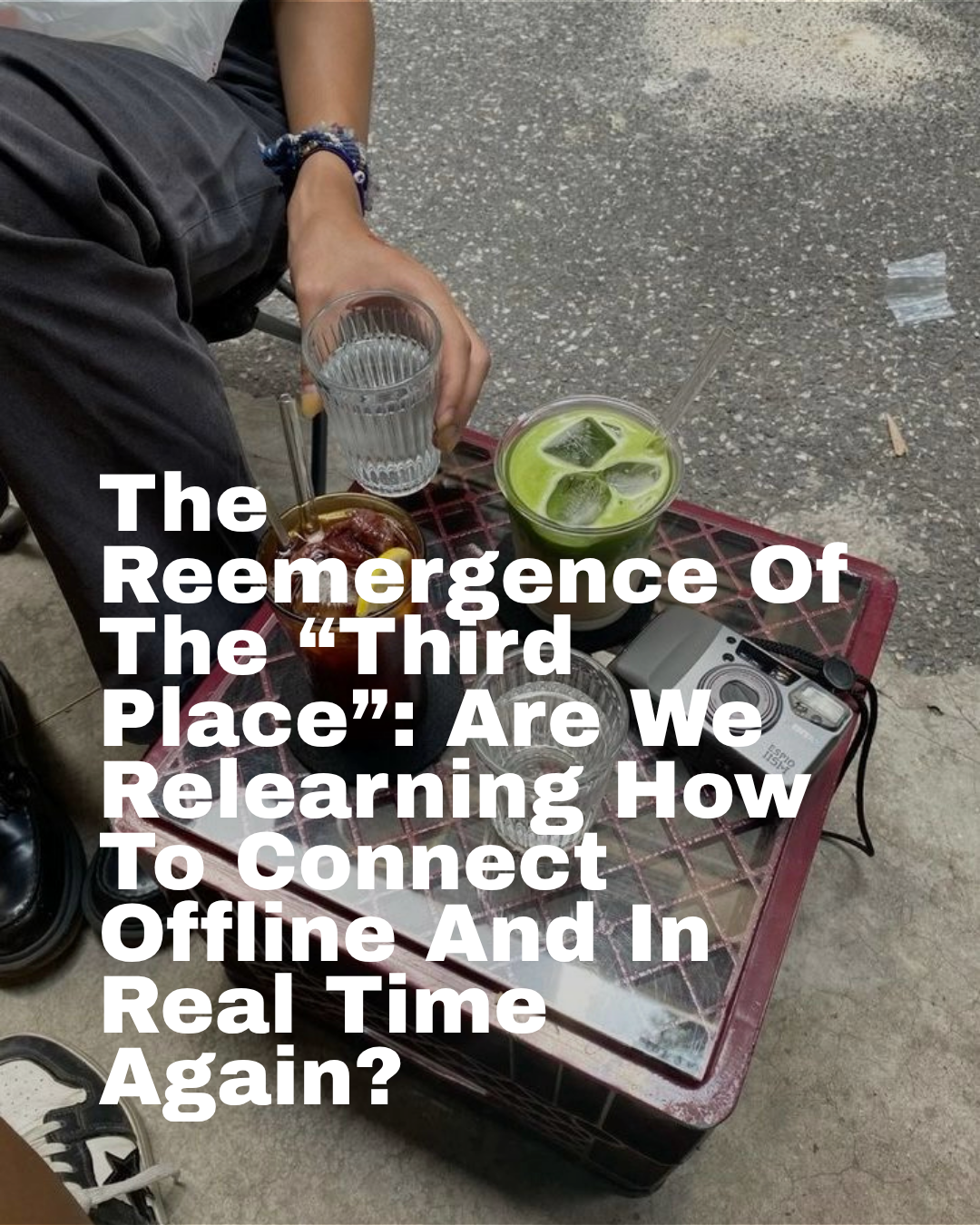
The internet was supposed to make us more connected. So why, in the age of technology, does it seem we seek to form connections with each other more deeply in physical spaces again?
With the more recent emergence of things like run clubs, art collectives like Black Creatives Social Club, and wellness communities like Tempohaus, one might argue that we are becoming more intentional about our social wellbeing again. At least on the surface.
Sociologists call these “third place”: the environments outside our homes and workplaces where we come together to, eat, drink, have conversations to establish or develop relationships that help satisfy needs that extend well beyond the four walls of our own living spaces.
Think listening bars, cultural events, neighborhood markets, and like PATDON Social and even Parlor — the social club movement.
In the past, diners and drive-in movie theaters, barbershops, shopping malls, and arcades were places where humans went to connect with other humans after days of endless deadlines.
But with the development of social media and technology as a whole, the third place became your bed on a Tuesday night, scrolling and sharing your thoughts in the comments on a two-minute video that might get a like or two. And thus, we find ourselves feeling void of the very thing we were put here to do.
Perhaps the resurgence of third places isn't a cultural trend at all. Perhaps it’s a reaction to something else.
For more than a decade, social platforms have made it possible to maintain hundreds of relationships without ever having to leave your bedroom. But we might be finding that we still crave something more. Something tangible. Something real.
Psychologists and sociologists tell us that as social creatures, we crave things like eye contact, physical touch, and deep human connection to feel satisfied.
Maslow’s hierarchy of needs tells us that belonging isn’t necessarily a luxury we pursue after everything else is taken care of. It’s one of the fundamental things that makes a life feel livable.
Roy Baumeister and Mark Leary say the same thing in different terms: “belonging isn’t just nice. It is a fundamental motivation.”
So are we actually learning how to connect again?
One study conducted by Social Connection in America found that 67% of Americans never participate in clubs or organizations. Link
Yet, a significant number of Americans still feel disconnected. Pew’s 2024 survey found that 16% of adults in the U.S. feel lonely or isolated. Link
So basically, 43.2 million Americans feel disconnected from one another but never do anything to actually connect outside of their workplace.
And although you might see third place becoming more popular on social media, the numbers are telling a far more complex story.